
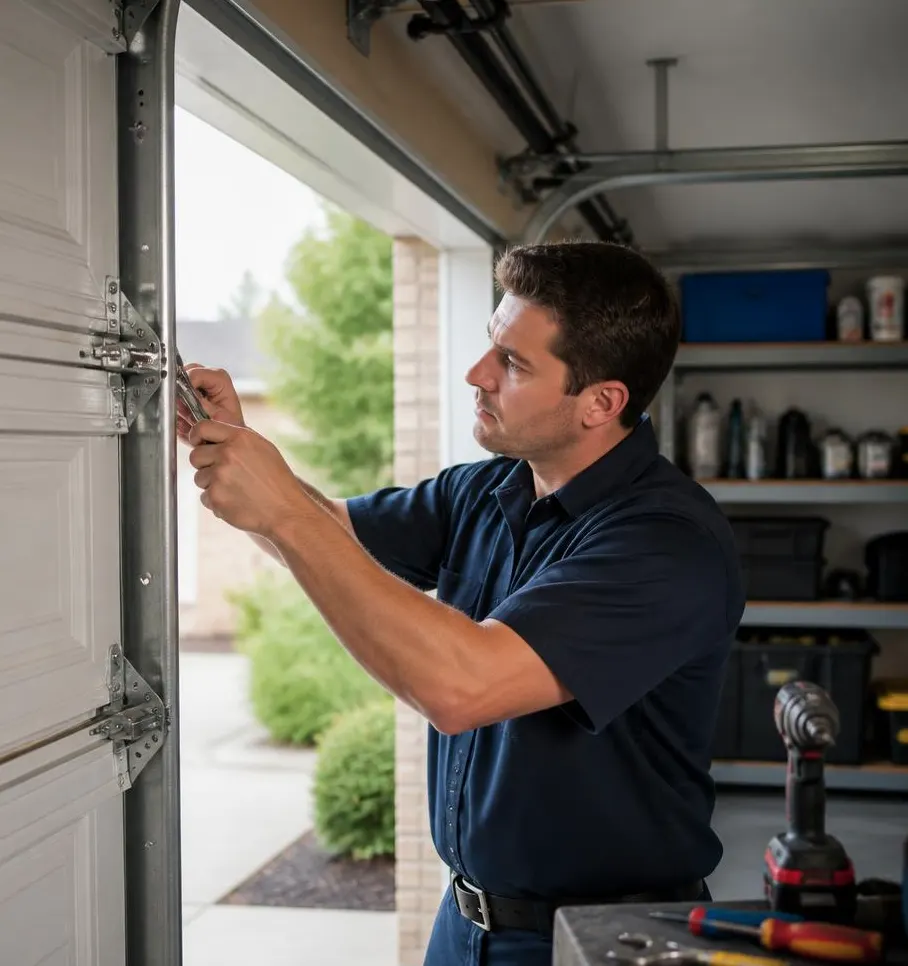
Getting Your Garage Door Ready for Winter in Tangerine
Winterizing a garage door here doesn't mean guarding against ice and snow. It means preparing for something just as hard on moving parts: the swing from hot, humid days to cool, dry nights that starts showing up as cold fronts move through in November and December. The short answer is this: lubricate the hardware, tighten what hurricane season loosened, check your weatherstripping before the air dries out, and test your safety sensors before the door gets heavier use over the holidays.
Why Central Florida's Mild Winter Still Stresses Your Door
Tangerine doesn't get freezing weather often, but it does get real temperature swings — 80 degrees in the afternoon and down into the 40s or 50s overnight after a front comes through. That daily expansion and contraction works on metal tracks, hinges, and springs the same way it works on roads and driveways: small stresses, repeated often, eventually show up as noise, misalignment, or a spring that lets go sooner than it should have.
At the same time, the air finally dries out after a long, humid hurricane season. That's good news for rust, but it means any wood trim or panels that swelled with moisture over the summer will start to shrink back. Gaps that weren't there in August can open up along the bottom seal or around the frame in November.
Check the Hardware Hurricane Season Left Loose
Wind-rated garage doors are built to flex slightly under storm pressure, and even without a direct hit, a season of wind gusts and heavy afternoon downpours can work bolts and fasteners loose. Before winter sets in:
- Check the bolts holding the tracks to the frame and tighten any that have backed out.
- Look at the hinges between panels for play or visible wear.
- Inspect the roller brackets for looseness, especially if the door has felt rougher or louder lately.
This is also a good time to look over the panels themselves for small dings or cracks that opened up during storm season. Left alone, a cracked panel lets in drafts now and moisture later when the rain returns in spring.
Lubricate While the Air Is Dry
Summer humidity washes lubricant off hinges, rollers, and springs faster than you'd think, which is part of why doors tend to get noisy by late summer. The drier air of late fall is actually the best time of year to lubricate, because it stays in place longer. Use a silicone-based or lithium-based garage door lubricant — not WD-40, which is a cleaner, not a lubricant — and apply it to:
- The hinges between panels
- The rollers (if they're metal; nylon rollers typically don't need it)
- The torsion spring
- The track-side of the opener's chain or screw drive
A few minutes with a lubricant and a rag wiping off the excess will cut down on the squeaks and grinding you'll otherwise hear every time the temperature drops overnight and the metal contracts slightly.
Inspect Weatherstripping Before It Shrinks and Cracks
The rubber seal along the bottom of the door and the vinyl stripping around the frame both take a beating from UV and humidity over a Florida summer. As the air dries out heading into winter, stripping that's already brittle will start to crack and pull away from the frame. That matters for a few reasons:
- Gaps let in cooler drafts on the nights temperatures drop into the 40s
- Gaps are exactly what small animals look for as they seek warmth once nights get cold
- Water from afternoon storms or morning dew can wick under a broken seal and reach stored items or a wood-framed opening
If the bottom seal is cracked, flattened, or no longer making full contact with the floor when the door is closed, replace it now rather than waiting for a wet-season leak to force the issue.
Test the Balance and the Safety Sensors
With the garage likely seeing more opens and closes over the holidays — guests, deliveries, decorations going in and out of storage — it's worth confirming the door is actually safe and balanced before the season gets busy. Disconnect the opener and lift the door by hand halfway; it should stay in place on its own. If it drifts up or crashes down, the spring tension is off and it's a job for a technician, not a DIY adjustment.
Also test the auto-reverse safety sensors by waving a broom handle through the beam while the door is closing. If the door doesn't stop and reverse immediately, that's a safety issue worth addressing before kids, pets, or holiday packages are moving through the garage more often.
Watch for Pests as Nights Cool Down
As temperatures drop, it's common for small animals, insects, and rodents to look for a warm, dry place to wait out the cooler nights — and a garage with a damaged bottom seal is an easy target. A tight seal isn't just about keeping out drafts; it's your first line of defense against unwanted visitors all winter long.
When to Call Precision Garage Door of Tangerine
If your door is off balance, the springs look stretched or rusted, or the opener isn't reversing reliably on contact, that's not a lubricant-and-weatherstripping fix — it's a safety issue. Our team handles Garage Door Spring Repair and full Garage Door Tune-Up & Maintenance visits that cover everything above: hardware tightening, lubrication, balance testing, and sensor checks, done right the first time.
Call Precision Garage Door of Tangerine today to schedule a winter tune-up before the holiday season puts your door to the test.